Win-Back Sequences for Demo-Page Drop-Offs
Recover high-intent demo visitors with person-level identification and timely, contextual outreach.
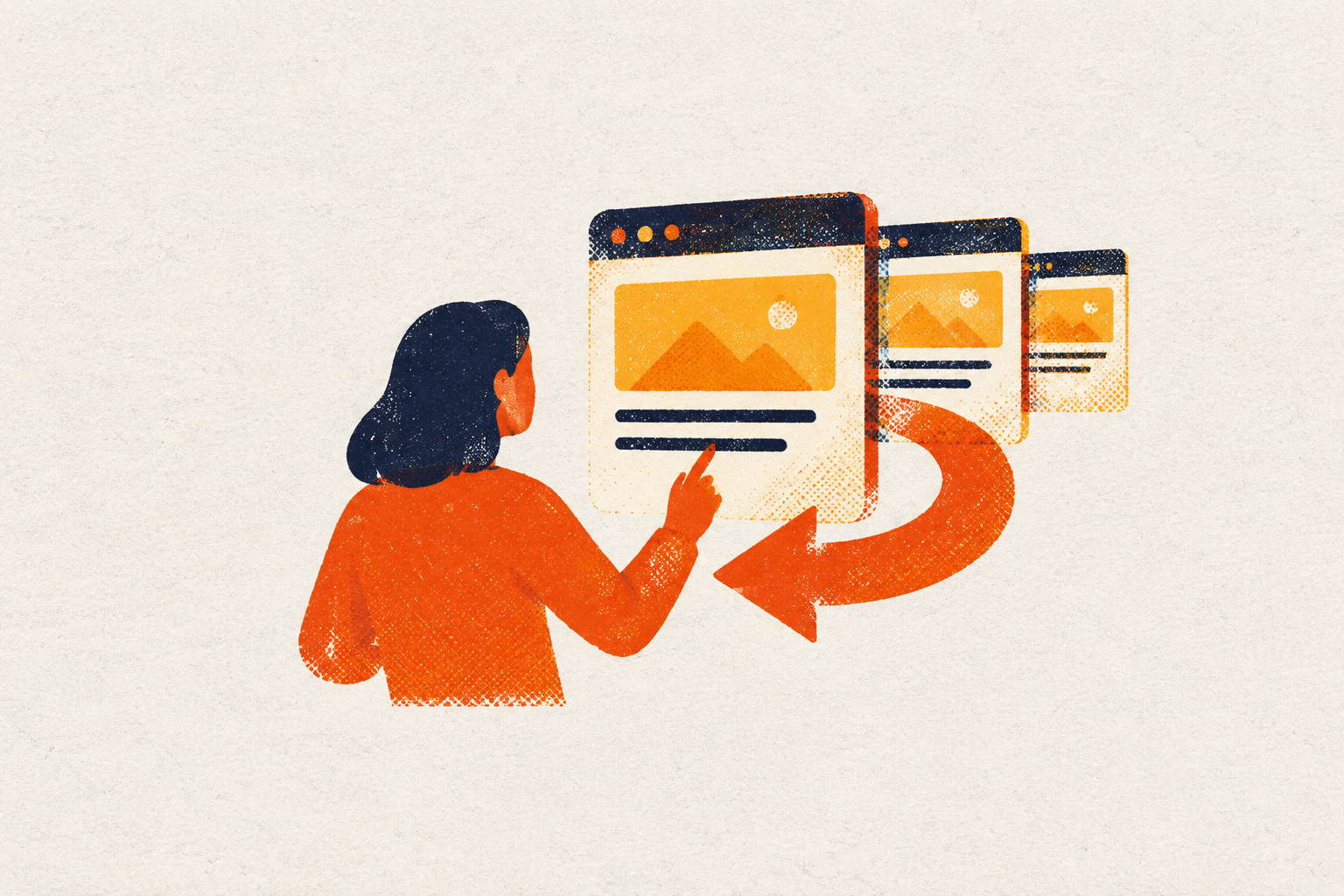
Demo-page win-back sequences bring back visitors who showed buying intent but left before asking to talk. The effective approach combines person-level identification, complete visitor context, and timely outreach. A demo-page exit is a perishable signal, and the sequence must act while the visitor’s interest is still live.
Why a demo-page drop-off is a high-intent signal, not a lost lead
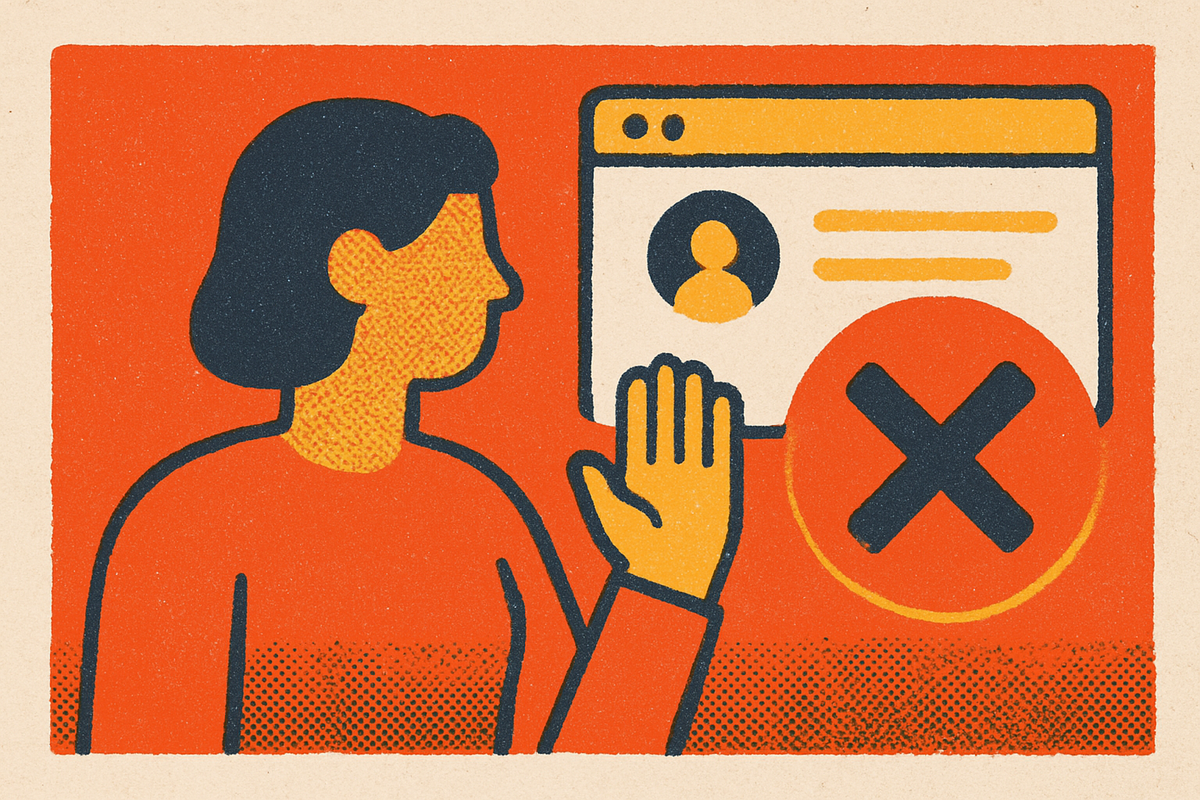
A prospect looks through product pages, checks pricing, gets to the demo page, and leaves without sending the form. For demand generation, the conversion is missing. Yet that visitor has already done more qualification work than almost any other anonymous session on the site. The exit does not erase the evaluation that preceded it.
Repeated visits to pricing, product, or demo pages strengthen that evidence because they suggest active consideration. One visit to a blog gives less reason for direct outreach. The distinction is important before any automation begins, since a recovery program should respond to demonstrated intent. Its chance to win the visitor back lasts only while they are still weighing the purchase.
Why most teams fail to act on demo drop-offs: the anonymity problem
The obstacle is usually not a missing email sequence. It is a missing recipient. Over 95% of website traffic is anonymous, leaving teams able to see research activity without a name or email they can act on. The gap between a recorded visit and a reachable person is where demo-page recovery stalls.
Without identification, teams mostly have to use generic retargeting across a broad pixel audience to bring visitors back. That approach cannot support the same person-specific messaging or rep escalation based on an individual’s visit history. Solving anonymity comes first, but the method used determines what the sequence can do next.
Company-level versus person-level identification and why the distinction defines what your sequence can do
Company-level identification checks a visitor’s IP address against databases of known corporate IP ranges to find the company and its firmographics. It does not identify the individual behind the visit. Residential connections, mobile networks, VPNs, and shared office infrastructure also weaken coverage. Company-level identification yields an account that requires further prospecting before a lead can be contacted directly.
Person-level identification uses cookie-based identity graphs to return details such as name, email, title, LinkedIn profile, and visit behavior without a form fill. Coverage is lower and largely limited to US-based traffic because of GDPR restrictions in the EU. The matches with the highest confidence are deterministic, tied to a hashed email from a campaign link the visitor clicked, while cold organic traffic matches less often. These methods fail in different directions. A corporate connection may resolve only to a company, while a remote worker invisible to reverse-IP identification may still resolve to a person.
For sequence design, the distinction is operational. Company-level data needs separate enrichment to find a person the team can reach, while a person-level match can give the team that recipient directly.
How match rates are reported and what to verify before choosing a tool
A quoted match rate is useful only when its denominator is clear. Company-level coverage can be presented as though it measures person-level resolution, although the two produce different outputs. Published person-level rates for RB2B have varied widely because those who reported them used different denominators. That variation does not establish a difference in the product itself.
What share of total sessions resolves to a named person with a reachable email address? That figure determines the pool of demo-page visitors eligible for direct recovery, rather than the broader pool of recognizable accounts. Buyers should also establish whether bot and crawler sessions are filtered before reporting, because contaminated traffic undermines both coverage claims and the intent signals used for enrollment.
Bot and AI crawler traffic as a contamination risk inside demo-page intent signals
A bot visit to a demo page is not buying intent. If it triggers outreach, it consumes sequence capacity, rep time, and budget without a buyer behind the activity. DataDome’s Galileo Threat Research Team reports that 80% of AI agents do not identify themselves when visiting a website. User-agent filtering alone therefore leaves a substantial detection gap.
Detection requires behavioral analysis, device fingerprinting, and TLS fingerprinting in combination. A well-designed identification layer separates human sessions from AI agents and crawlers before win-back logic runs, while reporting the content those agents consumed and who operates them. Some AI agents research products on behalf of buying organizations, making their activity a distinct category of intelligence. Keeping those categories separate protects both the human-intent signal and its denominator.
What a complete visitor record needs to contain before the first outreach step runs
A name and email establish reachability. Before enrollment, a useful record should contain business email, title, company, LinkedIn profile, seniority, job function, and a do-not-call-filtered phone number where available. Personal email may also be present in person-level output. The full event journey supplies the context that contact details cannot, showing pages viewed, their order, time spent, and the traffic source or ad platform behind the visit.
That journey should inform the first message. Someone who comes from a LinkedIn ad for a specific use case needs different copy from someone who finds a competitor comparison through organic search. CRM status must distinguish customers, existing contacts, and net-new prospects so acquisition messaging does not reach people already in a different relationship. The ICP flag provides another entry gate, reserving high-touch recovery for visitors whose fit justifies the outreach capacity.
Structuring the win-back sequence: timing, touches, and what each step is trying to do
The lesson for sequence design is to work backward from the short buying window. A starting cadence to test places the first touch on the same day or next business day. Email is the primary channel, with a simultaneous Slack alert allowing the relevant rep to add a personalized LinkedIn touch. The message should address the content viewed and offer useful help, such as a relevant case study, an answer to a likely objection, or a 15-minute call.
The second touch, around day two to four, adds social proof supported by the visitor’s company size, industry, or role. A return visit between touches should interrupt this schedule and trigger a behavioral branch.
Around day seven, the third touch shifts toward clarity about what a demo would provide and the cost of delay for the visitor’s use case. A recorded demo, self-serve trial, or specific resource offers an alternative to a live call. The exit touch, around day ten to fourteen, acknowledges that the visitor may not be ready, leaves a clear re-entry point, and suppresses active outreach. These dates are testing anchors. Later re-engagement should resume at the appropriate step.
Using real-time re-visit signals to branch and accelerate mid-sequence
A visitor who returns to the demo page after the first email requires a different response from one who goes quiet. A return to demo or pricing can trigger a Slack alert containing the current page, visit count, and time on page, enabling a call within minutes. A visit to integration documentation, an industry case study, or an ROI calculator instead supports outreach focused on that new evaluation context.
Form interaction and exit intent warrant a different branch from passive viewing because they indicate a near-conversion. Scroll depth and video plays add detail to those decisions. Signed webhook payloads for person.identified and person.activity events provide the delivery path into HubSpot, Salesforce, or Slack. The event arrives as activity happens, allowing the sequence to respond without manual monitoring.
Connecting identified visitors to CRM, ad platforms, and outreach tools without manual steps
Manual lookup and enrollment introduce delay into a time-sensitive program. The operational requirement is automatic movement from identification to CRM record to outreach enrollment. HubSpot, Salesforce, or Attio should receive identified records after a CRM status check prevents duplicates and inappropriate customer messaging. Enrollment can then trigger the cadence in the rep’s existing sales engagement tool.
Slack or Microsoft Teams alerts should include the visitor’s name, title, company, LinkedIn profile, traffic source, and pages viewed. That context makes prompt personalization practical. Google, Meta, and LinkedIn can receive identified records for acquisition suppression and matched account-based retargeting audiences where the identity supports it. Preserving the original traffic source through these handoffs also connects eventual pipeline to the campaign that generated the visit.
Attributing demo-page visits to specific campaigns and what that changes about budget decisions
An anonymous demo-page arrival establishes that a campaign generated interest. An identified arrival connected to a later conversion establishes which recoverable lead that campaign produced. That difference affects how teams spend because the number of clicks alone does not show ICP fit or which visitors are later won back. Campaign and creative attribution need to stay with the person record all the way through the sequence.
Consider campaign X bringing identified, ICP-fit visitors to the demo page who then convert through outreach. Campaign Y gets the same number of clicks but brings fewer identified visitors and prospects who are a poorer fit. Those outcomes support reallocating budget toward X rather than treating equal traffic as equal performance. Suppression stops acquisition targeting for people already in sequence, while conversion feedback shows which sources are worth spending more on.
Choosing identification tooling for a demo-page win-back program: what to evaluate
The selection standard is sequence readiness. Evaluation should establish whether a tool separates bot traffic, returns a full event journey, checks CRM status, delivers real-time signals, and preserves traffic source and ad platform. Missing any of those elements creates work or uncertainty elsewhere in the program. Even with a high match count, teams need enough context in the records to use them.
Leadpipe offers deterministic person-level identification on US B2B traffic, returning business and personal email, phone, LinkedIn, and firmographics. Its integrations include HubSpot, Salesforce, Slack, Outreach, and Salesloft. RB2B matches visitors to LinkedIn profiles and sends their names, profile URLs, and verified business emails to Slack, but its person-level coverage is for US traffic only. These options address direct contactability, while their fit still depends on the program’s record and delivery requirements.
Leadfeeder, part of Dealfront, combines company identification with CRM integration but needs separate enrichment for individual names. ZoomInfo WebSights identifies companies and surfaces likely decision-makers from its contact database. Some teams can validly begin with company identification and manual enrichment through a sales prospecting tool or Clay, then move to person-level platforms as the recovery workflow develops.
Existing infrastructure also affects the choice. HubSpot Breeze Intelligence, formerly Clearbit, provides native visitor identification, CRM enrichment, and form shortening for HubSpot teams. Albacross uses its own IP-to-company mapping that suits European markets, and Auto-Engage starts email and LinkedIn sequences when a visitor crosses a set intent threshold. Warmly brings company- and person-level data together through a multi-provider waterfall and sends real-time Slack alerts, but partial CRM write-back needs to be set up separately.
Putting it together: the full win-back program from anonymous visit to recovered pipeline
When a visitor leaves the demo page, the identification layer filters non-human traffic and attempts a person-level match. Enrichment adds contact details, fit, CRM status, source, and journey context. Existing customers and active pipeline contacts are suppressed, while net-new, ICP-fit people enter the sequence and the CRM. The assigned rep receives an alert in time to act on current interest.
Scheduled outreach then draws on the visitor’s role and the content they viewed, while what they do live determines the branch for the next step. A conversion connects recovered pipeline to the originating campaign. If the sequence ends without conversion, active outreach stops, account-based retargeting offers a way back with less pressure, and a later high-intent visit can reopen the step that fits.